How to Design a Smart Residential Water Distribution Network With Individually Monitored Plumbing Branches
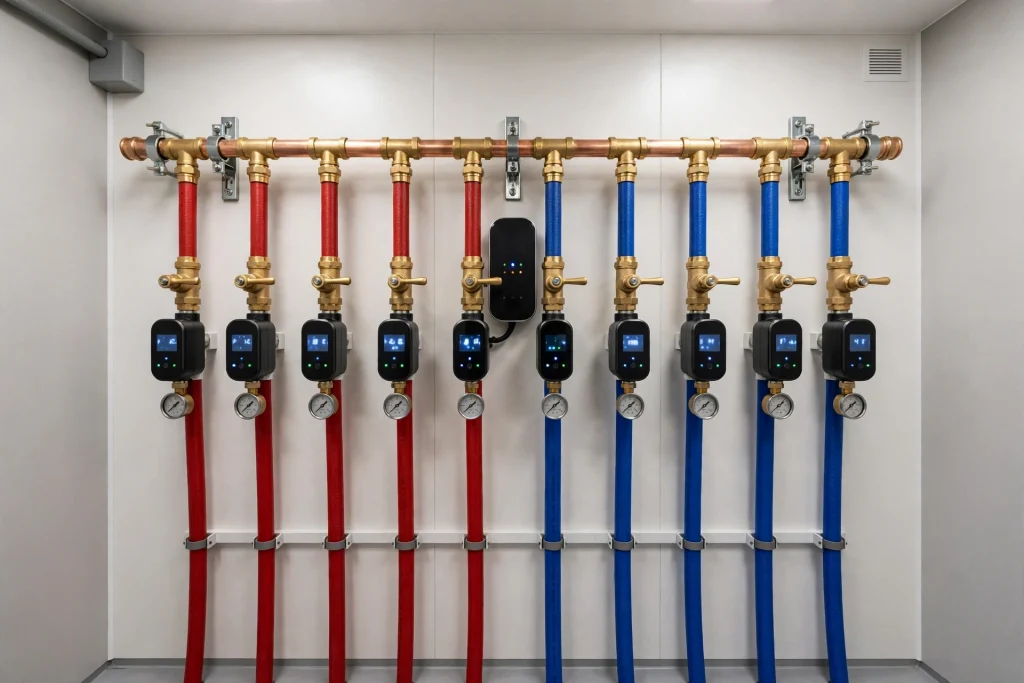
A smart residential water distribution network watches every branch of your plumbing separately, so a leak in a bathroom pipe is reported as a bathroom leak — not just as unexplained water use somewhere in the house. Instead of one meter at the street telling you that water is flowing, individual sensors on each branch learn the normal pattern of every tap, toilet and appliance, and raise the alarm the moment one branch behaves differently. The result is faster leak detection, less water damage, and a clear picture of where every litre in your home actually goes.
This matters because most household water damage does not come from a dramatic burst pipe. It comes from a slow leak behind a wall, a running toilet, or a dripping supply line that goes unnoticed for weeks. Industry claims data shows water damage and freezing account for roughly a fifth to nearly a third of homeowners insurance claims, with an average claim running into five figures. A monitored network catches those quiet failures early, often before a single stain appears on a ceiling.
Which Smart Monitoring Approach Fits Your Home’s Plumbing Layout?
There is no single right design, because every home’s plumbing is laid out differently. A small house with a simple trunk-and-branch layout can be covered well by one main-line monitor plus a handful of point sensors at the risky appliances. A larger home with a manifold system, where each fixture has its own home-run pipe from a central manifold, is the ideal candidate for true branch-by-branch monitoring, because every branch is already separate and easy to instrument. The first design decision is therefore to map your own layout before buying any hardware.
Start at the water meter and trace the main line to where it first splits. Note each branch: kitchen, bathrooms, laundry, outdoor taps, water heater, and any irrigation line. For each branch, ask three questions: how much damage would a leak here cause, how hard is it to reach, and how much water does it normally use? A second-floor bathroom branch scores high on all three, so it gets a sensor first. A garden tap scores low, so it can wait. This short survey turns a vague idea into a shopping list with priorities.
What Does Each Type of Monitor Actually See?
A main-line monitor sits on the pipe where water enters the house and watches everything that passes through it. The best of them sample pressure hundreds of times per second or read flow ultrasonically through the pipe wall, and they learn the signature of each fixture over time — a shower looks different from a dishwasher, and a toilet refill looks different from both. When the pattern breaks, for example a steady flow at three in the morning when nobody is home, the system flags it as a likely leak.
| Device Type | What It Monitors | Installation | Typical Cost Range |
|---|---|---|---|
| Main-line flow monitor | Whole house, all branches together | Clamp-on or inline at the main | Low to moderate; clamp-on is DIY |
| Pressure-based monitor | Whole house, fixture signatures | Inline near the main shutoff | Moderate; plumber usually needed |
| Branch flow sensor | One plumbing branch only | Inline on the branch pipe | Moderate per branch |
| Point moisture sensor | One appliance or floor area | Placed on the floor, no plumbing work | Low per sensor |
| Smart shutoff valve | Whole house, plus automatic shutoff | Cut into the main line | Moderate to high; plumber needed |
Point sensors fill the gaps a main-line monitor cannot see. A small battery-powered puck under the dishwasher, behind the washing machine or under a sink catches a leak the moment water touches the floor, even if the flow is too small for the main-line monitor to notice. The strongest designs combine the two: a main-line monitor for the whole-house picture and point sensors at the highest-risk appliances, so a leak is caught twice over. Add an automatic shutoff valve and the system can close the water supply itself when a major leak is detected, which is the step that turns an alert into actual damage prevention.
Branch-by-Branch Monitoring: How Individual Sensors Pinpoint Leaks
Branch monitoring works by giving each plumbing branch its own flow or pressure sensor and its own baseline. The sensor on the kitchen branch learns that the dishwasher runs at a certain flow for a certain time, while the sensor on the upstairs bathroom branch learns the rhythm of showers and toilet refills. When a branch shows flow outside its learned pattern — a constant trickle on the bathroom branch at night, for example — the system names the branch in the alert, and you know exactly which part of the house to check.
The practical benefit is speed. With only a whole-house monitor, a hidden leak means searching the entire house, often opening walls to find it. With branch monitoring, the search starts in one room. The sensors themselves are small inline or clamp-on devices that fit on PEX, copper, CPVC and PVC pipe, and most connect over Wi-Fi or a low-power radio to a hub or a phone app. Power is usually a long-life battery or a nearby outlet, so no new wiring is needed in most homes.
Automatic Shutoff Valves and the Plumbing They Protect
An automatic shutoff valve is the muscle of a smart water network. It sits on the main line and closes the supply when the monitoring system detects a leak that matches a burst or a major failure. Some valves close on any sustained abnormal flow, others wait for a pattern the homeowner has set, such as continuous flow above a threshold for a set number of minutes. Either way, the valve can stop thousands of litres from flooding a house while the owners are at work or on holiday.
- Size it to the main: match the valve to your main line diameter, usually 3/4 inch or 1 inch in a single-family home, so flow is not restricted.
- Place it after the meter: fit the valve indoors near the main shutoff, where it is protected from frost and easy to reach.
- Keep a manual override: choose a valve with a manual handle or button, so the water can be turned back on during a power cut or a false alarm.
- Test it regularly: exercise the valve every few months so it does not seize, and check that the app alert and the valve action agree.
- Mind the pressure: a pressure-regulating valve may be needed alongside it, especially if your supply pressure is high or variable.
One caution is worth stating plainly: a shutoff valve is a plumbing job, not a DIY project for most homeowners. It requires cutting into the main line, and a mistake there floods the house it is meant to protect. Budget for a licensed plumber, and have the valve fitted at the same time as any other main-line device so the pipe is opened only once. The valve should also be tested with the monitoring system before the plumber leaves, so you know the alert and the shutoff work together.
Pressure, Flow and Temperature: Reading What Your Water Is Telling You
Flow and pressure tell different stories, and a good network listens to both. Flow sensors measure how much water moves and when, which is ideal for spotting a running toilet or a dripping tap. Pressure sensors watch the shape of the pressure wave, which reveals which fixture is running and can expose hidden problems such as pinhole leaks that show up as tiny pressure losses during a diagnostic test. Temperature sensors add a third signal: a branch that drops toward freezing warns of a burst risk before the pipe actually fails.
Most smart monitors run a periodic self-test, often called a plumbing check, that closes the main supply for a few minutes and watches the pressure. If the pressure holds, the system is tight. If it falls, there is a leak somewhere, even if no water is visible. Running that test monthly is a good habit, and it is the closest thing to a health check-up your plumbing will ever get. Over time, the data also shows your real usage patterns, which helps with everything from sizing a water softener to spotting a toilet that has started to run.
Temperature data is easy to overlook, but it earns its place in cold climates. A branch sensor that reports a falling temperature in an unheated part of the house is an early warning that a pipe is heading toward freezing, and a simple alert can prompt you to open a cabinet door, run a tap, or add pipe insulation before the freeze happens. Some systems combine the temperature reading with a flow reading, so a frozen branch shows up as zero flow plus low temperature, which is a much clearer signal than either reading on its own.
Installing a Monitored Network Without Rebuilding Your Plumbing
A monitored network does not require new pipes. In most homes the work is a series of small additions: a clamp-on or inline monitor at the main, a few inline sensors on the highest-risk branches, point sensors at the appliances, and a shutoff valve if you want one. Clamp-on monitors are the easiest starting point, because they read flow through the pipe wall and need no cutting, no shutoff and no plumber. Inline devices take more work but give more precise readings, so they suit branches where accuracy matters.
Plan the installation in order of risk, not in order of convenience. Fit the main-line monitor and the shutoff valve first, because they protect the whole house. Then add branch sensors to the upstairs bathroom, the kitchen and the laundry, and point sensors under the dishwasher and washing machine. Leave the garden tap and the rarely used guest bathroom for last. Spreading the work across a few weekends also spreads the cost, and each stage makes the house safer than it was before.
Keep a simple diagram of the finished network, showing where each sensor sits and which branch it watches. Label the sensors in the app with plain names such as upstairs bathroom or kitchen cold, rather than the default device codes, so an alert at two in the morning tells you where to go without any decoding. That small bit of housekeeping is what turns a collection of gadgets into a system you can actually use under stress.
Costs, Savings and Insurance Angles Worth Weighing
As a broad estimate, a basic monitored setup — a clamp-on main-line monitor and a handful of point sensors — typically costs a few hundred, while a full branch-monitored network with an automatic shutoff valve and professional installation can run into the low thousands. The payback comes from three directions: water saved by finding running toilets and drips, damage avoided by catching leaks early, and insurance. Some insurers offer a discount for homes with leak detection and automatic shutoff, and a few now require it for high-value homes, so it is worth asking your insurer before you buy.
The savings are real but they are not instant, and no honest estimate should promise a payback period. A running toilet can waste hundreds of litres a day, so finding one quickly is worth real money. A burst pipe caught in minutes instead of hours is worth far more. The fairest way to judge the investment is to compare it with the cost of a single water damage claim, which industry data puts well into five figures on average, plus the disruption of drying out, repairing and redecorating.
Smart Water Network FAQs for Monitored Plumbing Branches
Do I need a plumber to install a smart water monitor?
It depends on the device. Clamp-on monitors that read flow through the pipe wall are designed for DIY installation and usually take under half an hour. Inline monitors and automatic shutoff valves need the pipe cut, so a licensed plumber should fit them.
Will a smart monitor detect a leak behind a wall?
Yes, if the leak changes the flow or pressure pattern. A steady unexplained flow, especially at night, is the classic sign of a hidden leak, and branch sensors narrow it to one part of the house. Point floor sensors cannot see inside a wall, but a main-line or branch monitor can.
What happens if the Wi-Fi goes down?
Most systems keep monitoring locally and store the data, then sync when the connection returns. An automatic shutoff valve usually still works on its local rules, but remote alerts and app control need the connection, so a valve with a manual override is important.
Can branch sensors work with PEX and copper pipe?
Yes. Most branch and clamp-on sensors are designed for PEX, copper, CPVC, PVC and brass pipe in common residential sizes, usually from half an inch to one inch. Check the manufacturer’s compatibility list for your exact pipe type before ordering.
How do I stop false alarms from confusing the system?
Let the system learn for two to four weeks before trusting its alerts, and tell it about unusual but legitimate uses such as filling a pool or running a sprinkler. Most apps let you set quiet hours and flow thresholds, which cuts nuisance alerts sharply once the baseline is established.
Final Thoughts: A Monitored Plumbing Network Turns Leaks Into Alerts
A smart water distribution network does not change your plumbing; it changes what you know about it. Map your branches, start with a main-line monitor, add branch sensors where the risk is highest, and fit an automatic shutoff valve if you want the system to act as well as warn. The leaks that used to hide behind walls will start arriving as notifications on your phone, and that is a far better place to meet them.