How to Protect Wooden Deck Boards From Sun Damage and Seasonal Moisture
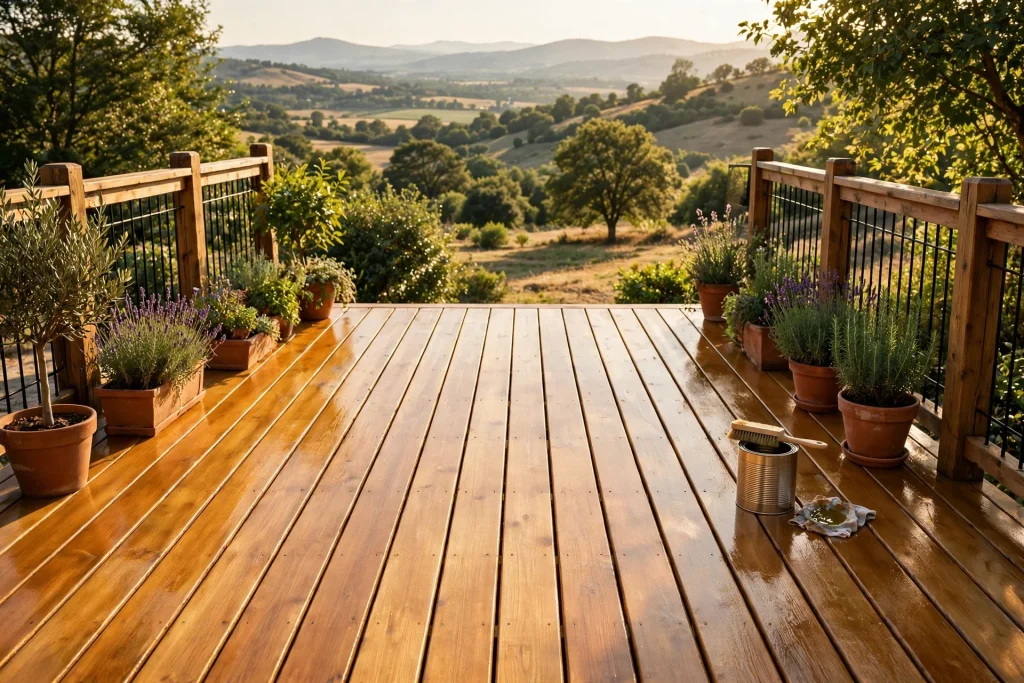
A wooden deck lives outdoors all year, and it shows it: sun bleaches the colour, rain swells the boards, winter cold shrinks them again, and the cycle repeats until boards cup, crack, splinter, or turn grey. None of that is inevitable in a single season, and much of it can be slowed with a routine that is less about expensive products and more about cleaning, drying, and recoating at the right time.
The short answer is to protect deck boards in three linked ways: keep water moving off and away from the deck, keep the surface clean so moisture and mould cannot sit in dirt and debris, and recoat with a suitable stain, oil, or sealant when the old finish stops beading water — usually every one to three years depending on sun, species, and exposure. Shade helps, drainage helps, and a deck that is inspected once a season will outlast one that is only noticed when a board feels soft.
How Sun and Moisture Actually Damage Deck Boards
Sunlight damages wood mainly through ultraviolet light, which breaks down lignin near the surface, bleaches colour, and leaves fibres rough and dry. That is why a deck in full sun greys faster than a shaded one, and why a tinted finish lasts longer than a clear one: pigment blocks some UV, while a clear finish lets more through. Heat adds to the problem by drying the surface while the underside stays damp, and that difference in moisture is what makes boards cup, twist, and check along the grain.
Moisture damage is slower but more serious. Rain, dew, snow, and even morning condensation soak into unprotected end grain and into cracks, and repeated wetting and drying makes boards swell and shrink. Over time, that movement loosens fasteners, opens gaps where water can sit, and creates the damp, shaded conditions where mould, algae, and rot thrive. Rot is not just cosmetic: a board that feels soft or spongy underfoot, or that a screwdriver sinks into easily, has lost strength and needs attention, not just a new coat of stain.
- Sun: UV bleaching, surface drying, checking, and greying, worst on south-facing decks.
- Moisture: swelling, cupping, fastener loosening, mould, algae, and rot, worst in shade and poor drainage.
- Both together: the wet-dry, hot-cold cycle that opens cracks and lets water deeper in.
Deck Board Finishes Compared for Sun and Rain
Penetrating oils soak into the wood, nourish the fibres, and are easy to maintain because they do not form a film that can peel, but they usually need recoating more often, especially on horizontal surfaces in full sun. Film-forming sealants and stains sit on the surface, offer stronger water repellency, and can last longer, but when they fail they tend to crack and peel, and preparation for recoating takes more work. Tinted products, whether oil or stain, generally protect against UV better than clear products, because the pigment itself blocks light.
Choosing a finish starts with the wood species and what is already on the deck. Pressure-treated pine, cedar, redwood, and hardwoods like ipe behave differently, and a product that suits one may not suit another, so follow the manufacturer's guidance for the species and for any previous finish. If the deck already has a peeling film finish, that finish usually needs to be stripped or sanded before a new coat will bond, while a penetrating oil can often be recoated after cleaning, provided the surface is dry and sound. Test a small, inconspicuous area first, and check the colour when dry, because wet stain always looks darker than the finished result.
Cleaning a Deck Without Damaging the Boards
Cleaning is protection, not just appearance, because dirt, leaves, and algae trap moisture against the wood and feed mould. Start by sweeping or blowing leaves and debris off the deck and out of the gaps between boards, where damp matter sits longest. For a deeper clean, use a deck-safe detergent and a stiff brush, working with the grain, and rinse with a garden hose rather than a high-pressure washer, which can gouge softwood and open fibres if used too close or at too high a pressure.
For mould or algae, a suitable deck cleaner or a mild, manufacturer-recommended solution, applied and rinsed according to its instructions, is safer than bleach, which can damage wood and harm nearby plants. Work in sections, keep the surface wet while cleaning, and let the deck dry fully — usually at least a day or two of dry weather, depending on climate — before recoating, because sealing wet wood traps moisture and causes peeling and uneven absorption. Check the weather forecast before you start: a clean, dry deck with no rain expected for a day or two is the window to aim for.
Planters, rugs, and furniture also need attention, because anything that sits on a deck traps moisture underneath it. Lift planters onto feet or blocks so air can circulate, move rugs and mats regularly, and check underneath them for damp or staining. If a rug or planter has left a dark mark, that is a sign moisture has been sitting there, and the area needs cleaning and drying before it becomes a rot spot.
Drainage, Ventilation, and Shade for Deck Boards
Water that cannot drain away will damage a deck no matter how good the finish is, so check that the deck slopes slightly away from the house, that gaps between boards are clear, and that water does not pool in low spots. Under the deck, good airflow matters: a deck built close to the ground with no ventilation stays damp underneath, and boards rot from below while the top still looks fine. Clear vegetation, soil, and debris from under and around the deck, and make sure downspouts and gutters do not discharge directly onto it.
Shade is the most effective sun protection after a tinted finish, and it also makes the deck more comfortable to use. A pergola, sail shade, umbrella, or even a deciduous tree that leafs out in summer and lets light through in winter can reduce UV and heat on the boards, but any shade structure needs proper fixings and, for larger structures, professional advice about wind loads and foundations. Trim overhanging branches that drop leaves and sap onto the deck, because leaves trap moisture and sap stains, and a trimmed tree still gives shade without constantly littering the surface.
Snow and ice need care too. Shovel snow off a deck promptly with a plastic shovel, not a metal one that can gouge boards, and avoid rock salt or harsh de-icers that can damage wood and finishes — check the product guidance for the deck finish before using any de-icer. In freeze-thaw climates, water that seeps into cracks and then freezes expands and opens those cracks further, which is another reason to keep finishes intact and gaps clear before winter arrives.
When Deck Boards Need Repair, Not Just Recoating
Recoating cannot save a board that is rotten, split through, or structurally weak, and knowing the difference saves time and money. Inspect the deck once a season: walk it slowly, look for soft spots, dark damp patches, raised fasteners, and boards that move or bounce, and probe suspect areas gently with a screwdriver — sound wood resists, rotten wood sinks in easily. Check railings, stairs, and the ledger connection to the house, because those are safety-critical, and any movement, rust, or rot there should be assessed by a competent builder or deck specialist, not just painted over.
A single damaged board can often be replaced without rebuilding the deck, provided the joists underneath are sound and the replacement board matches in species, thickness, and finish. Replacing a board is also a chance to check the joists and fasteners beneath it, and to use corrosion-resistant fasteners suitable for the wood and finish, because rust stains and fastener failure are common where the wrong fixings were used. If many boards are soft, or the structure underneath is damaged, a professional assessment is the right step, because a deck is a structure people stand on, not just a surface to look at.
Safety during maintenance matters too. Wear gloves and eye protection when sanding or cleaning, follow product instructions for stains and cleaners, and keep children and pets off a deck while finishes are drying. If sanding old paint or stain, be aware that older finishes may contain lead or other hazardous materials, and in that case, seek professional advice rather than sanding dry and creating dust.
A Seasonal Deck Protection Routine That Actually Happens
A routine that is too complicated will not happen, so keep it to four moments a year. In spring, sweep, clean, inspect, and recoat if the water test shows the finish has failed — sprinkle water on the boards, and if it beads, the finish is still working, while if it soaks in quickly, it is time to recoat. In summer, sweep regularly, move planters and furniture, and watch for UV fading and checking. In autumn, clear leaves from gaps and surfaces before they trap winter moisture, and in winter, shovel snow promptly and check for ice dams or pooling after storms.
Keep a simple record: the product used, the date applied, and any boards replaced, because that record makes the next recoat easier and helps you notice whether a finish is lasting one year or three in your climate. A deck in full sun in a hot climate will need recoating more often than a shaded deck in a mild climate, and that is normal, not a failure of the product. The goal is not a deck that never needs work, it is a deck where work is small, regular, and planned, rather than large, urgent, and expensive.
Final Thoughts: Deck Boards That Survive Sun and Seasons
Protecting wooden deck boards from sun and seasonal moisture comes down to three habits: keep water off and away, keep the surface clean and dry, and recoat when the finish stops beading water. Add shade where you can, inspect once a season, and replace boards that are genuinely rotten rather than covering them. Do that, and a wooden deck can stay safe, comfortable, and good-looking for many seasons, instead of greying, cupping, and cracking in just a few.
Wooden Deck Protection FAQs
How often should I seal or stain a wooden deck?
Most wooden decks need recoating every one to three years, depending on sun exposure, wood species, and the product used. Use the water test: if water beads on the surface, the finish is still working, and if it soaks in quickly, it is time to clean and recoat.
Is a tinted stain better than a clear sealant for sun protection?
Tinted products generally protect better against UV, because pigment blocks sunlight that would otherwise break down wood fibres and bleach colour. Clear finishes preserve the natural look but usually need recoating more often in full sun.
Can I pressure wash my wooden deck?
A pressure washer can damage softwood if used too close or at too high a pressure, gouging fibres and opening the surface to moisture. A garden hose, deck detergent, and a stiff brush are safer for routine cleaning, and any pressure washing should be done carefully at low pressure, following the deck and product guidance.
What causes deck boards to cup or warp?
Cupping is usually caused by uneven moisture — the top drying in sun while the underside stays damp — combined with the natural movement of wood as it swells and shrinks. Good drainage, ventilation under the deck, and an intact finish reduce, but do not entirely eliminate, that movement.
How do I know if a deck board is rotten?
Look for soft or spongy wood, dark damp patches, and boards that move or bounce, and probe suspect areas gently with a screwdriver — sound wood resists, rotten wood sinks in easily. Rotten boards, and any rot in railings, stairs, or the ledger, should be assessed and replaced, not just recoated.
Should I use paint on a wooden deck?
Paint is generally not advised for deck surfaces, because it tends to crack and peel as boards move with moisture and temperature, and preparation for repainting is more work. A penetrating oil or a deck stain designed for horizontal surfaces is usually a better choice.