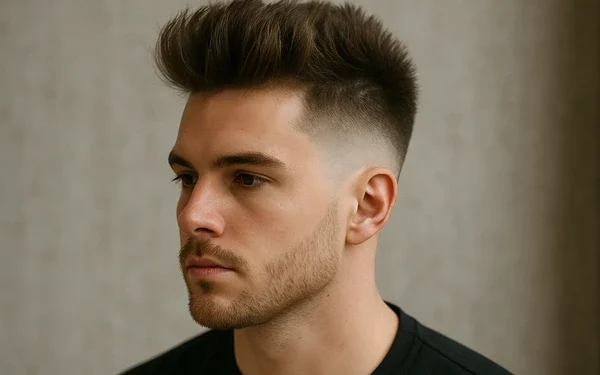
If you’ve been keeping an eye on modern men’s hairstyles, you’ve probably noticed a trend that’s been quietly gaining a lot of attention — the blowout taper. Equal parts clean and edgy, this cut blends the sharpness of a taper fade with the volume of a blowout, creating a look that’s perfect for guys who want a little personality in their hair without crossing into anything too extreme.
While it sounds like something that belongs in a car repair shop, the blowout taper is all about precision styling. It takes the best parts of a blowout — height, texture, and flow — and merges them with the neat finish of a taper fade. The result is a hairstyle that works whether you’re heading into the office, hitting a night out, or just want to look effortlessly put together.
In this guide, we’ll break down exactly what a blowout taper is, its history, who it works for, and how to style and maintain it. By the time you’re done reading, you’ll know exactly how to ask your barber for one — and keep it looking fresh.
1. What Is a Blowout Taper?
A blowout taper is a hairstyle that combines two distinct hair concepts: the blowout and the taper fade. The blowout portion refers to the styling — hair on top is given significant lift, volume, and a natural-looking flow, often achieved with a blow dryer and product. The taper fade is the cutting technique — hair gradually shortens on the sides and back, seamlessly blending into the skin near the neckline and around the ears.
The magic of the blowout taper lies in its balance. You get enough length on top to experiment with texture, but the sides stay tidy, preventing the style from looking messy or overgrown.
Most barbers achieve this by:
- Clipping the sides and back shorter while keeping length toward the crown.
- Fading gradually toward the hairline and neckline.
- Blow drying the top upwards or backward, depending on your desired look.
This hairstyle has become a favorite because it’s adaptable. It works well for casual styles, formal looks, and even modern streetwear aesthetics. It’s also friendly to most hair types — whether you’ve got straight, wavy, or curly hair, a blowout taper can be customized for you.
The name “blowout” might suggest a wild, windswept style, but with the taper, you get structure. It’s like having the best of both worlds — stylishly unruly on top but polished on the sides.
If you’ve ever been torn between keeping your hair sharp or letting it breathe with some volume, the blowout taper is the compromise you’ve been waiting for.
2. The Origins of the Blowout Taper
The blowout taper didn’t just appear out of nowhere — it’s the result of hairstyle evolution over the last few decades. The blowout itself started gaining traction in the early 2000s, particularly in New York and New Jersey, thanks to hip-hop culture and shows like Jersey Shore. It was bold, voluminous, and unapologetically flashy.
Meanwhile, the taper fade has been around much longer, rooted in the clean, professional cuts worn by men in the military and formal work settings. It became a barbering standard because it provided a polished, versatile look without the harsh lines of a high fade.
At some point, barbers began blending these styles, keeping the top full and blown out while tapering the sides into a subtle fade. The result was less in-your-face than the early 2000s blowout, but still had character. This modernized version took hold in urban barbershops, especially in areas with diverse hair textures and creative style preferences.
Social media — particularly Instagram, TikTok, and Pinterest — helped push the blowout taper into the spotlight. Videos showing the transformation from shaggy hair to sharp blowout taper cuts started going viral, inspiring guys around the world to try it.
Today, the blowout taper is worn by celebrities, athletes, and influencers, making it one of the most recognizable hybrid hairstyles of the 2020s.
3. Why the Blowout Taper Works for So Many People
Not every hairstyle works for every face shape or hair type, but the blowout taper is surprisingly universally flattering. The reason? It offers adjustable proportions — you can control how much volume you keep on top and how tight the taper is on the sides.
For example:
- Round faces benefit from extra height on top to elongate the appearance of the face.
- Square faces look sharper with a tighter taper to emphasize jawlines.
- Oval faces can wear almost any variation of the style.
Hair texture also plays a role, but the blowout taper adapts beautifully:
- Straight hair gets a sleek, high-volume look with minimal effort.
- Wavy hair looks naturally textured without much product.
- Curly hair can be shaped for extra dimension and controlled volume.
Another reason the blowout taper works so well is maintenance flexibility. You don’t have to get it touched up every week like a skin fade, but it also doesn’t grow out into a shapeless mess. Depending on how fast your hair grows, you can stretch barber visits to every 3–5 weeks without losing the style.
Finally, it’s a hairstyle that transitions easily between environments. You can style it more structured for professional settings or keep it loose and airy for casual days. It’s truly one of the few cuts that can suit both a business meeting and a weekend music festival.
4. How to Ask Your Barber for a Blowout Taper
One of the most common problems men face when getting a haircut is miscommunication with their barber. You might think you’ve described exactly what you want, but unless you’re speaking the right “barber language,” you could walk out with something completely different.
Here’s how to clearly ask for a blowout taper:
- Specify the taper fade — Tell your barber you want a low, mid, or high taper. Most blowout tapers work best with a mid-taper because it leaves enough room for the blowout effect without cutting too high.
- Describe the top length — Decide how much hair you want to keep for styling. Most blowout tapers keep 3–5 inches on top for volume.
- Mention the blowout styling — Let them know you want the top styled upward or backward with volume. This signals they shouldn’t cut too short on top.
- Bring a reference photo — Even the best verbal description can’t beat showing your barber an actual example of what you want.
Pro tip: Don’t just say “I want a blowout taper” and expect them to know exactly what you mean. The style has variations, and your version might differ from theirs. The more details you give, the better your results will be.
If you’re visiting a new barber, it’s also worth mentioning any hair growth patterns you have (like cowlicks or curls) so they can adjust the cut accordingly.
5. Styling a Blowout Taper at Home
A blowout taper looks its best fresh out of the barber’s chair, but with the right routine, you can keep it looking sharp between visits. Here’s a simple step-by-step:
Step 1: Start with clean, slightly damp hair.
A blowout needs volume, and clean hair has more lift. Wash with a lightweight shampoo and conditioner to avoid weighing it down.
Step 2: Apply a heat protectant.
Since you’ll be using a blow dryer, protect your strands from heat damage.
Step 3: Blow dry for volume.
Using a round brush, lift the hair at the roots while directing warm air upward and back. This creates that signature “blown out” height.
Step 4: Add styling product.
Pomades, clays, or lightweight mousses work well depending on your hair type. For a natural look, go with matte clay; for shine, use pomade.
Step 5: Finish with a light hairspray (optional).
If you want all-day hold without stiffness, choose a flexible-hold spray.
With practice, you can style a blowout taper in 10 minutes or less in the morning. The real secret is consistency — doing it daily trains your hair to naturally fall into shape.
6. Maintenance and Upkeep
The blowout taper isn’t the most high-maintenance style out there, but it does require some upkeep to keep it from losing its edge. Here’s what you should keep in mind:
- Barber visits: Every 3–5 weeks for a cleanup. The taper needs to stay sharp to maintain the contrast between the sides and top.
- Daily styling: Expect to spend at least a few minutes each morning blowing out the top.
- Product care: Use lightweight styling products to avoid weighing down the blowout.
- Hair health: Regular trims prevent split ends, especially since heat styling is involved.
If you want to stretch the time between cuts, you can learn to do minor touch-ups at home with a trimmer — but leave the taper fade blending to the pros unless you’re confident in your skills.
7. Popular Variations of the Blowout Taper
One of the coolest things about the blowout taper is how easily it can be customized. Here are some popular variations:
- Low Blowout Taper: Minimal fade with more fullness on the sides. Good for conservative workplaces.
- Mid Blowout Taper: The most balanced option, offering a clean fade with noticeable volume.
- Curly Blowout Taper: Keeps natural curls on top while tapering the sides for a defined silhouette.
- Textured Blowout Taper: Adds heavy layering on top for a choppier, messier look.
- Slicked Back Blowout Taper: Combines retro slick-back vibes with modern volume.
Each variation changes the overall vibe of the style, so it’s worth experimenting over time to see which one fits your personality best.
8. Final Thoughts on the Blowout Taper
The blowout taper isn’t just a hairstyle — it’s a statement of balance. It blends structured precision with effortless style, making it one of the most adaptable cuts you can get right now. Whether you’re a low-maintenance guy who just wants to look presentable or someone who enjoys experimenting with hair trends, the blowout taper has room for you.
With the right barber, proper styling technique, and a little upkeep, you can make this hairstyle your own and keep it looking sharp all year round.
Keep an eye for more latest news & updates on Pinay Flix!