Residential heat recovery ventilation systems are becoming increasingly important in modern homes because buildings are now designed to be more airtight and energy efficient than in the past. Better insulation, sealed windows, and reduced air leakage can lower heating and cooling losses, but they can also reduce the amount of fresh outdoor air entering naturally.
Without adequate ventilation, indoor air can gradually accumulate moisture, odors, carbon dioxide, cooking fumes, cleaning-product emissions, and other airborne contaminants. A heat recovery ventilation system, commonly called an HRV, helps solve this problem by continuously replacing stale indoor air with fresh outdoor air while recovering part of the heat that would otherwise be lost.
This combination of ventilation and energy recovery makes HRV systems particularly valuable in contemporary houses, renovated properties, and tightly sealed residential buildings. When correctly designed and maintained, they can improve indoor air quality, control excess humidity, reduce condensation risk, and support a more comfortable living environment throughout the year.
What Is a Heat Recovery Ventilation System?
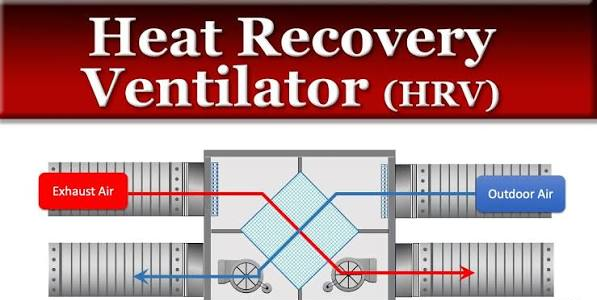
A heat recovery ventilation system is a mechanical ventilation system that extracts stale air from selected rooms and supplies fresh filtered air to living spaces.
The system typically includes:
- A central ventilation unit
- Supply air ducts
- Extract air ducts
- Exterior intake and exhaust terminals
- Air filters
- Fans
- A heat exchanger
- Controls and sensors
The key feature is the heat exchanger.
Instead of simply exhausting warm indoor air outside, an HRV transfers much of that heat to the incoming fresh air during colder weather. The two air streams normally remain physically separate, so stale indoor air does not directly mix with the fresh supply air.
This process reduces the energy penalty normally associated with ventilation.
Why Modern Homes Need Controlled Ventilation
Older homes often received significant ventilation through gaps around windows, doors, roofs, and wall assemblies.
Modern construction aims to eliminate uncontrolled air leakage.
This is beneficial for energy efficiency, but it means fresh air must be introduced in a more deliberate way.
Without adequate ventilation, occupants may experience:
- Stuffy rooms
- Persistent cooking smells
- High indoor humidity
- Condensation on windows
- Mold growth
- Poor sleeping comfort
- Excess indoor carbon dioxide
- Accumulation of airborne pollutants
An HRV provides predictable ventilation rather than relying on random leaks or opening windows.
How a Residential HRV System Works
An HRV usually operates continuously at a low airflow rate.
Stale air is extracted from moisture- and odor-producing rooms such as:
- Bathrooms
- Kitchens
- Utility rooms
- Laundry rooms
At the same time, fresh outdoor air is supplied to:
- Bedrooms
- Living rooms
- Home offices
- Family rooms
Both air streams pass through the central ventilation unit.
Inside the unit, they move across opposite sides of a heat exchanger.
During cold weather, heat from the outgoing indoor air warms the incoming outdoor air.
The stale air is then exhausted outside, while the pre-warmed fresh air is distributed throughout the home.
How Heat Recovery Improves Energy Efficiency
Ventilation is necessary, but conventional ventilation can remove a large amount of conditioned indoor air.
For example, opening windows during winter allows warm air to escape and cold air to enter directly.
A heat recovery system reduces this loss.
The incoming air is not usually heated all the way to indoor temperature by the HRV itself, but the heat exchanger can substantially reduce the temperature difference.
This means the home’s heating system has less work to do.
The exact efficiency depends on factors such as:
- Heat exchanger design
- Airflow rate
- Outdoor temperature
- Indoor temperature
- System balance
- Filter condition
- Duct installation
High-quality systems can recover a significant portion of the heat contained in exhaust air.
Improving Indoor Air Quality
The main purpose of an HRV is not simply energy saving.
Its most important function is providing continuous fresh air.
Indoor air can contain pollutants from many everyday sources.
These may include:
- Cooking
- Cleaning products
- Furniture
- Building materials
- Human respiration
- Pets
- Candles
- Personal-care products
- Indoor hobbies
A properly designed ventilation system continuously dilutes these pollutants by replacing stale indoor air with filtered outdoor air.
Reducing Carbon Dioxide Buildup
People naturally produce carbon dioxide when breathing.
In occupied bedrooms and living spaces, carbon dioxide levels can rise when ventilation is poor.
High concentrations can contribute to a feeling of stuffiness and may indicate insufficient fresh-air exchange.
An HRV supplies outdoor air continuously, helping prevent excessive buildup.
This can be especially useful in:
- Bedrooms occupied overnight
- Small apartments
- Home offices
- Highly airtight houses
Ventilation rates should still be designed according to local building requirements and household occupancy.
Controlling Indoor Humidity
Everyday household activities release moisture into the air.
Common sources include:
- Showering
- Cooking
- Drying clothes
- Washing dishes
- Breathing
- Indoor plants
If this moisture is not removed, indoor humidity can become excessive.
High humidity can contribute to:
- Window condensation
- Mold growth
- Musty odors
- Damp building materials
- Dust-mite activity
HRV systems remove humid indoor air from bathrooms, kitchens, and utility spaces and replace it with outdoor air.
In cold weather, the incoming air often contains less absolute moisture, which can help reduce indoor humidity.
Preventing Condensation Problems
Condensation occurs when warm humid air contacts a cold surface.
Typical locations include:
- Windows
- Exterior walls
- Roof areas
- Uninsulated corners
Persistent condensation can eventually damage finishes and contribute to mold or material deterioration.
By controlling indoor moisture levels, an HRV can reduce the conditions that cause condensation.
However, ventilation alone cannot correct problems caused by:
- Water leaks
- Poor insulation
- Thermal bridging
- Roof damage
- Plumbing leaks
The source of any persistent moisture problem should always be identified.
HRV Systems and Bathroom Ventilation
Bathrooms create large amounts of humidity during showers and baths.
Traditional bathrooms often use separate exhaust fans that operate only when switched on.
In an HRV-equipped home, bathrooms may be connected to the central extract system.
A boost control can temporarily increase ventilation after showering.
This approach can provide more consistent moisture removal.
Common control methods include:
- Wall switches
- Humidity sensors
- Timers
- Automatic boost modes
The system should be designed carefully so sufficient airflow is available when moisture production is high.
Kitchen Ventilation and HRV Systems
Kitchens produce heat, moisture, grease, and cooking odors.
An HRV may extract general background air from the kitchen, but it is usually not a replacement for a dedicated cooker hood where grease-heavy cooking occurs.
Grease can damage ventilation components and contaminate ductwork.
A properly designed kitchen may therefore use:
- HRV background extraction
- Separate range hood for cooking
- Appropriate makeup-air strategy where required
The exact arrangement should follow local regulations and appliance requirements.
HRV Air Filtration
Fresh outdoor air passes through filters before entering the home.
These filters can reduce airborne particles such as:
- Dust
- Pollen
- Insects
- Outdoor debris
Some systems offer higher-grade filters for improved particle removal.
Filter performance varies significantly, so homeowners should review manufacturer specifications.
An HRV should not automatically be considered a complete air-purification system.
Specialized air cleaners may still be required where particular pollutants are a concern.
HRV vs Energy Recovery Ventilation
Heat recovery ventilation and energy recovery ventilation are similar but not identical.
An HRV mainly transfers sensible heat.
An energy recovery ventilator, or ERV, can transfer both heat and some moisture between the air streams.
HRV Systems
HRVs are often useful where indoor humidity needs to be reduced during cold weather.
ERV Systems
ERVs may be beneficial in climates where controlling moisture transfer is important in both heating and cooling seasons.
The better choice depends on:
- Climate
- Indoor humidity
- Air-conditioning use
- Building airtightness
- Occupancy
- Local regulations
A professional ventilation designer can determine which technology is more appropriate.
Whole-House HRV Systems
Whole-house HRV systems connect multiple rooms to one central unit.
They are particularly suitable for new construction because ductwork can be planned before walls and ceilings are finished.
A typical arrangement supplies fresh air to bedrooms and living spaces while extracting from bathrooms and utility areas.
Whole-house systems offer several advantages:
- Balanced ventilation
- Central filtration
- Consistent airflow
- Reduced need for multiple independent fans
They require careful duct design to perform correctly.
Decentralized Heat Recovery Ventilation
Not every property can easily accommodate a large duct system.
Decentralized heat recovery units provide an alternative.
These compact systems are installed directly through exterior walls.
They can be useful for:
- Apartments
- Renovations
- Individual rooms
- Extensions
- Older houses without duct space
Some decentralized units work in pairs, alternating between supply and exhaust modes.
Others use continuous balanced airflow.
They can provide heat recovery without extensive duct installation.
Balanced Ventilation
An HRV works best when supply and extract airflows are balanced.
If too much air is extracted, the building can become negatively pressurized.
If too much air is supplied, positive pressure may develop.
Poor balance can affect:
- Comfort
- Door operation
- Air leakage
- Combustion appliances
- System efficiency
Professional commissioning typically involves measuring airflow at each terminal and adjusting the system accordingly.
Importance of Proper Duct Design
Ductwork is one of the most important parts of an HRV installation.
Poor duct design can create:
- Excessive noise
- Reduced airflow
- High fan energy use
- Uneven ventilation
- Condensation
Good duct systems should use appropriate diameters, smooth routes, and minimal unnecessary bends.
Supply and extract ducts passing through cold spaces may also require insulation.
Airtight duct connections help prevent leakage and maintain system efficiency.
HRV Placement
The central unit should be installed where it can be accessed for maintenance.
Common locations include:
- Utility rooms
- Mechanical rooms
- Garages
- Basements
- Service cupboards
The location should provide enough space for:
- Filter changes
- Fan servicing
- Condensate drainage
- Duct connections
Installing the unit in a difficult-to-access location can make routine maintenance less likely.
Condensate Drainage
During cold weather, moisture from warm exhaust air may condense inside the heat exchanger.
Many HRV systems therefore require a condensate drain.
The drain must be installed correctly to prevent:
- Water leakage
- Freezing
- Odors
- Drain blockages
Installation instructions should be followed carefully.
Noise Control
A well-designed HRV should operate quietly.
Noise can originate from:
- Fans
- High air velocity
- Restrictive ductwork
- Poorly selected vents
- Vibration
Noise problems can often be reduced through:
- Correct duct sizing
- Flexible connectors
- Acoustic insulation
- Silencers
- Lower continuous fan speeds
Bedrooms require particular attention because even moderate airflow noise may become noticeable at night.
Smart Controls and Sensors
Modern HRV systems can include advanced controls.
Possible features include:
- Humidity sensing
- Carbon dioxide sensing
- Air-quality sensors
- Automatic boost
- Smartphone control
- Filter reminders
- Scheduled operation
Demand-based ventilation allows the system to increase airflow when needed and reduce it when occupancy or humidity is low.
This can improve comfort and reduce unnecessary fan energy.
Summer Operation
Heat recovery is especially useful during cold weather, but HRV systems may operate differently in summer.
Some units include a summer bypass.
This allows incoming air to avoid the heat exchanger under suitable conditions.
For example, cooler evening air may be supplied directly to the home without being warmed by outgoing indoor air.
A bypass does not replace air conditioning, but it can improve ventilation efficiency during mild summer conditions.
HRV Systems in Airtight Homes
Airtight homes benefit strongly from controlled mechanical ventilation because natural infiltration is intentionally minimized.
High-performance homes may use HRV systems as a central part of their indoor environmental strategy.
Ventilation can help maintain:
- Fresh air
- Humidity control
- Consistent indoor conditions
- Reduced reliance on window opening
The system should be integrated with insulation, air sealing, heating, and cooling design.
Can HRV Systems Reduce Allergens?
An HRV can reduce the amount of unfiltered outdoor air entering through random gaps because fresh air is directed through filters.
This may help reduce certain airborne particles.
However, allergen control depends on:
- Filter grade
- Filter condition
- Building leakage
- Indoor pollutant sources
Regular filter replacement is essential.
People with severe allergies should consider the complete indoor air-quality strategy rather than relying on ventilation alone.
HRV Maintenance Requirements
Routine maintenance is essential for good performance.
Replace or Clean Filters
Filters gradually collect dust and debris.
Blocked filters increase airflow resistance and reduce system efficiency.
Clean Air Terminals
Supply and extract vents should remain free from dust and blockage.
Inspect Exterior Grilles
Outdoor intake and exhaust terminals can become blocked by:
- Leaves
- Insects
- Debris
- Snow
Check Condensate Drain
The drainage system should remain clear.
Professional Servicing
Fans, heat exchangers, controls, and airflow balance may benefit from periodic professional inspection.
Common HRV Problems
Several issues may indicate that the system is not operating correctly.
These include:
- Weak airflow
- Excessive noise
- Condensation
- Stale rooms
- Persistent humidity
- Frequent filter blockage
- Unusual fan operation
Possible causes include:
- Dirty filters
- Blocked ducts
- Incorrect settings
- Poor balancing
- Fan problems
- Obstructed exterior terminals
Regular maintenance prevents many of these issues.
Choosing the Right HRV Size
System capacity should match the house and occupancy.
An undersized system may not provide enough fresh air.
An oversized system may create unnecessary noise or energy consumption.
Sizing should consider:
- Floor area
- Number of bedrooms
- Occupancy
- Building airtightness
- Number of bathrooms
- Local ventilation regulations
Airflow should ideally be calculated rather than estimated casually.
HRV Systems and Heating Systems
An HRV does not replace a heating system.
It recovers heat from exhaust air but normally does not produce enough heat to warm the entire house by itself.
It can operate alongside:
- Heat pumps
- Furnaces
- Boilers
- Radiant heating
- Electric heating
Its role is ventilation with heat recovery.
Energy Use of HRV Fans
HRV systems use electricity to operate fans.
Efficient fans and low-resistance ductwork can keep energy use relatively low.
The overall benefit depends on the balance between:
- Fan electricity
- Heat recovered
- Climate
- Ventilation rate
Modern electronically controlled motors can operate efficiently at low continuous speeds.
Retrofitting an HRV Into an Existing Home
Installing a whole-house system in an existing home can be more difficult because ducts must be routed through finished spaces.
Potential routes include:
- Attics
- Basements
- Ceiling voids
- Closets
- Service shafts
Where full ducting is impractical, decentralized units may provide a simpler alternative.
Renovation projects are often a good opportunity to install ventilation before walls and ceilings are closed.
Common Installation Mistakes
Poor installation can reduce the benefits of even a high-quality HRV.
Common mistakes include:
- Undersized ducts
- Excessive duct bends
- Poor insulation
- Incorrect airflow balancing
- Inaccessible filters
- Incorrect drain installation
- Supply vents too close to extract vents
- Poor exterior terminal placement
Professional design and commissioning are therefore important.
Frequently Asked Questions
What does a residential HRV system do?
It removes stale indoor air and supplies fresh outdoor air while recovering heat from the outgoing air.
Does an HRV improve indoor air quality?
Yes. Continuous ventilation can reduce humidity, odors, carbon dioxide, and many indoor pollutants by replacing stale air with filtered outdoor air.
Does an HRV replace air conditioning?
No. An HRV is primarily a ventilation system. It does not provide the same cooling function as an air conditioner.
Can an HRV help with condensation?
Yes. By removing humid indoor air, an HRV can reduce condensation risk when excess indoor moisture is part of the problem.
How often should HRV filters be changed?
The correct interval depends on the system, environment, and filter type. Filters should be inspected regularly and serviced according to manufacturer instructions.
Are HRV systems noisy?
A properly designed and balanced system should operate quietly. Poor duct sizing or high airflow can increase noise.
Can HRVs be installed in older homes?
Yes. Whole-house ducted systems may require more installation work, while decentralized heat recovery units can be useful where ducting is difficult.
Final Thoughts
Residential heat recovery ventilation systems provide a practical way to improve indoor air quality without sacrificing the energy efficiency of a well-sealed home. By continuously removing stale, humid air and supplying filtered outdoor air, an HRV can help reduce stuffiness, excessive moisture, condensation, and indoor pollutant buildup.
The heat exchanger makes this process more efficient by transferring much of the heat from outgoing air to incoming fresh air during cold weather. Modern systems can also include humidity controls, carbon dioxide sensors, automatic boost modes, summer bypass functions, and smart-home integration.
The greatest benefits come from correct design. System size, duct layout, airflow balance, noise control, filtration, and maintenance should all be considered together.
When properly selected, installed, and maintained, a residential HRV can support a healthier, more comfortable, and more energy-conscious indoor environment thro