HVAC Ductwork Problems That Reduce Airflow and Increase Household Energy Consumption
Heating and cooling systems play an essential role in maintaining comfortable indoor temperatures throughout the year. However, even a properly functioning air conditioner or furnace may struggle to deliver consistent comfort when the ductwork distributing conditioned air develops problems.
Air ducts carry heated or cooled air from HVAC equipment to different rooms. When these pathways become damaged, restricted, disconnected, or poorly insulated, the system may consume additional energy without maintaining the desired indoor temperature.
Understanding common HVAC ductwork problems helps homeowners recognize warning signs, prevent unnecessary energy waste, and improve household comfort without immediately replacing expensive heating and cooling equipment.
Why HVAC Ductwork Matters for Home Energy Efficiency
HVAC ductwork operates as the distribution network connecting heating and cooling equipment with living spaces.
Supply ducts deliver conditioned air into individual rooms, while return ducts carry air back toward the system for filtration and conditioning.
When properly designed and installed, this network supports balanced airflow and consistent temperature control.
However, poorly sealed or restricted ducts can interfere with system performance.
For example, a leaking supply duct running through an unconditioned attic may release cooled air before it reaches the intended room.
The HVAC system may then operate longer to satisfy the thermostat setting.
Similarly, inadequate return airflow can increase pressure imbalances and reduce equipment performance.
Because ductwork is often concealed in ceilings, walls, crawl spaces, or attics, these problems may remain unnoticed until comfort or energy costs become noticeably worse.
Recognizing the Early Warning Signs
Ductwork problems do not always produce visible damage. Instead, homeowners may notice changes in airflow, temperature, noise, or system operation.
Common warning signs include:
- One bedroom remains warmer or colder than surrounding rooms.
- Certain supply vents deliver noticeably weaker airflow.
- Heating and cooling cycles seem unusually long.
- Dust accumulates rapidly near air registers.
- Whistling, rattling, or unusual airflow noises occur.
- Utility bills rise without an obvious change in usage.
- Musty odors develop when the HVAC system operates.
These symptoms can also result from dirty filters, equipment faults, thermostat issues, or inadequate insulation.
Therefore, ductwork should be evaluated as part of the complete HVAC system rather than assumed to be the cause of every comfort problem.
Problem 1: Leaking Duct Connections Waste Conditioned Air
Air leakage is one of the most important ductwork problems affecting HVAC efficiency.
Leaks frequently develop around poorly sealed joints, disconnected fittings, damaged flexible duct sections, and deteriorating connections.
When conditioned air escapes through supply ducts, less reaches the intended living spaces.
This loss becomes especially significant when ducts pass through unconditioned areas such as attics, garages, or crawl spaces.
Return duct leaks can create different problems by drawing unwanted air from surrounding cavities.
Depending on the location, this may introduce dust, moisture, or contaminants into the system.
How to address leaking ducts
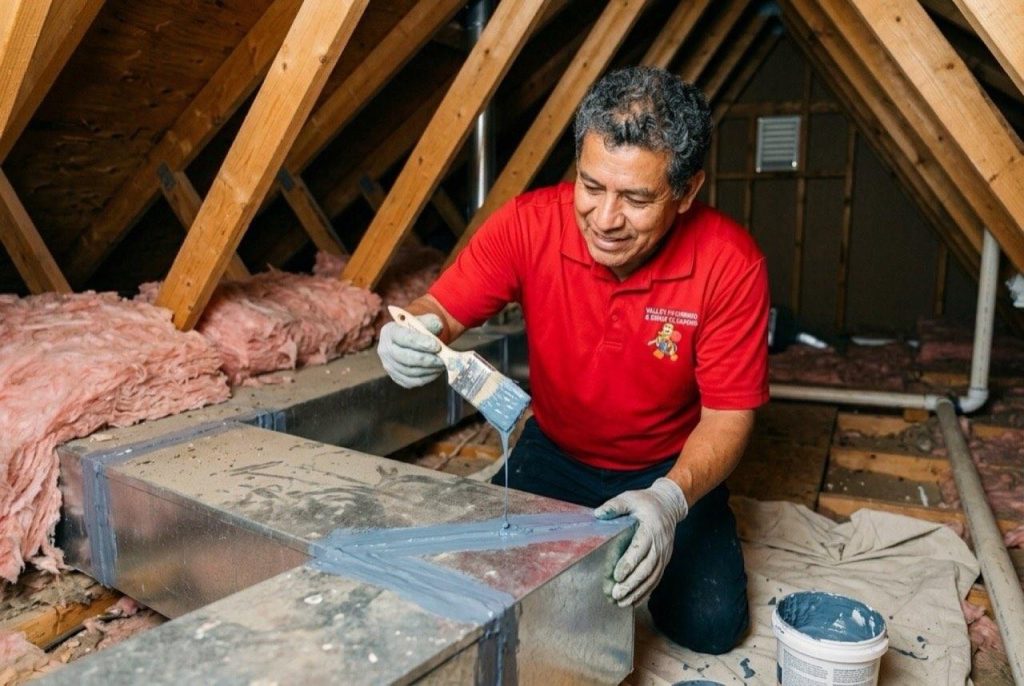
Accessible joints can often be sealed with HVAC-approved duct mastic or appropriate UL 181-rated tapes compatible with the duct materials.
Ordinary cloth-backed household duct tape is not a reliable permanent sealing solution.
Before sealing, inspect joints for loose connections and damaged components.
Professional duct leakage testing may be appropriate when extensive leakage is suspected or most ductwork is concealed.
Problem 2: Crushed or Kinked Flexible Ducts Restrict Airflow
Flexible ductwork is commonly installed in residential attics and concealed ceiling spaces.
Although it is convenient for connecting equipment to supply registers, improper installation can significantly restrict airflow.
Sharp bends, compressed sections, sagging runs, and excessive duct length increase airflow resistance.
A flexible duct that has been crushed beneath stored materials may deliver much less air than originally intended.
The resulting restriction can contribute to uneven room temperatures and increased pressure within the duct system.
Inspect accessible flexible ducts for:
- Sharp bends near connections.
- Sections compressed by framing or stored objects.
- Torn outer jackets or damaged insulation.
- Excessive sagging between supports.
- Loose or partially disconnected ends.
Flexible ducts should be supported and routed according to manufacturer instructions and applicable installation standards.
Severely damaged sections generally require replacement rather than temporary reshaping.
Problem 3: Poorly Sized Ducts Create Uneven Room Temperatures
Duct sizing directly influences how much conditioned air can reach different rooms.
Undersized ducts create excessive resistance to airflow, while poorly designed oversized duct systems may produce balancing difficulties or unnecessary installation costs.
A room located far from the HVAC equipment may receive inadequate airflow if its duct branch was not designed correctly.
Similarly, modifications made during renovations can disrupt the original distribution system.
Adding a new room or converting an attic into living space without evaluating existing duct capacity may create persistent comfort problems.
Proper duct design considers airflow requirements, available static pressure, duct length, fittings, and friction losses.
In residential systems, technicians commonly use recognized design methods such as ACCA Manual D.
Simply installing a larger duct without evaluating the complete system may not solve the underlying problem.
Problem 4: Dirty Air Filters and Blocked Registers Reduce Air Circulation
Not every airflow restriction occurs inside the ductwork.
A heavily loaded air filter can restrict airflow through the HVAC equipment.
This may reduce comfort and, in some systems, contribute to overheating or evaporator coil freezing.
Furniture, rugs, and other objects can also block supply or return registers.
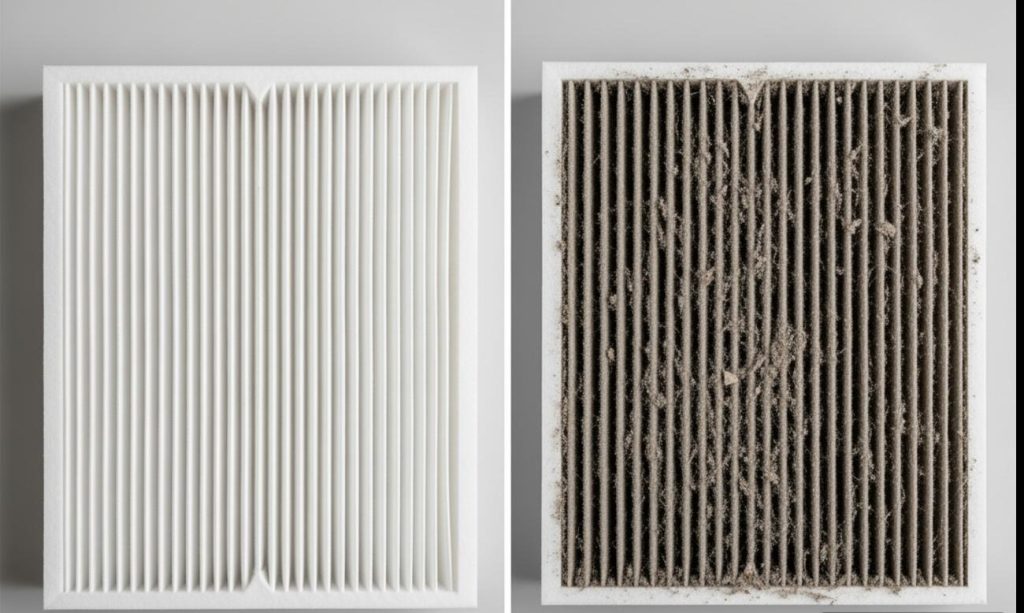
Homeowners should inspect filters regularly and replace or clean them according to the manufacturer’s instructions.
The appropriate replacement interval depends on filter type, household conditions, and equipment requirements.
Avoid installing a filter with a higher resistance rating than the system can accommodate.
Keep registers unobstructed to promote proper air circulation.
For persistent airflow problems, a technician can measure system static pressure to determine whether restrictions are excessive.
Problem 5: Inadequate Duct Insulation Increases Heat Transfer
Ducts running through hot attics or cold crawl spaces can gain or lose heat before conditioned air reaches the living areas.
During summer, cool supply air traveling through a poorly insulated attic duct may absorb heat from the surrounding environment.
During winter, warm air may lose heat while passing through cold spaces.
Both conditions can reduce delivered heating or cooling performance.
Insulating appropriate duct runs helps limit unwanted heat transfer.
However, air leaks should generally be sealed before adding insulation.
Insulation must also be selected and installed according to local building requirements and the duct system’s specifications.
Damaged vapor barriers or poorly installed insulation can create condensation problems in humid climates.
A qualified HVAC professional can assess suitable insulation levels and moisture-control details.
Problem 6: Disconnected Ducts Cause Major Air Distribution Problems
A completely disconnected duct can create a dramatic reduction in airflow to one or more rooms.
Connections may separate because of poor fastening, accidental damage, building movement, or improper installation.
In attics and crawl spaces, disconnected ducts can release large volumes of conditioned air into areas that do not require heating or cooling.
Homeowners may notice extremely weak airflow at a particular register even though the central system continues operating.
A disconnected return duct may also draw air from an attic, crawl space, or wall cavity.
Restoring these connections requires properly securing the duct sections and sealing the joints with approved materials.
Where access is difficult or ducts are damaged, professional repair is usually preferable.
Problem 7: Poor Return Air Design Disrupts System Performance
Return air pathways are just as important as supply ducts.
When a room receives conditioned air but lacks an adequate return path, pressure differences can develop, especially when interior doors remain closed.
These pressure imbalances can interfere with airflow and contribute to uneven temperatures.
Some homes rely on central return grilles instead of dedicated return ducts in every room.
This configuration can work when suitable transfer pathways are provided.
Possible solutions include properly designed transfer grilles, jump ducts, or adjustments to return duct capacity.
However, return air modifications should account for sound transmission, privacy, fire safety, and applicable building requirements.
A professional airflow assessment helps determine whether the return system is contributing to discomfort.
Problem 8: Duct Condensation Creates Hidden Moisture Damage
Condensation can develop when humid air contacts duct surfaces that are colder than the surrounding environment.
This is especially common around poorly insulated cooling ducts in humid attics or crawl spaces.
Water accumulation may damage insulation, ceiling materials, or nearby wood framing.
Over time, persistent moisture can encourage microbial growth.
Warning signs include damp duct insulation, water stains on ceilings, and unusual odors near air outlets.
Corrective measures depend on the source of moisture.
A technician may need to repair insulation, restore vapor barriers, correct air leakage, or investigate unusually high indoor humidity.
Condensation problems should be addressed promptly because simply drying the visible surface may not prevent recurrence.
Comparing Common HVAC Ductwork Problems
| Ductwork issue | Typical symptom | Potential impact | Recommended action |
| Leaking connections | Weak airflow or energy loss | Conditioned air escapes | Seal and secure joints |
| Crushed flexible ducts | Poor airflow in certain rooms | Higher airflow resistance | Correct routing or replace |
| Incorrect duct sizing | Uneven temperatures | Distribution imbalance | Professional duct evaluation |
| Blocked filters or registers | Reduced system airflow | Lower comfort and efficiency | Remove restrictions |
| Poor insulation | Temperature loss in ducts | Increased heating or cooling demand | Improve approved insulation |
| Disconnected ducts | Very low airflow at a register | Major distribution loss | Reconnect and seal |
| Inadequate return pathways | Pressure imbalance | Uneven comfort | Evaluate return design |
| Condensation | Damp insulation or stains | Moisture-related damage | Correct humidity and insulation problems |
The correct solution depends on the system design and the condition of the existing equipment.
Can Duct Cleaning Improve HVAC Airflow?
Duct cleaning is sometimes marketed as a universal solution for heating and cooling problems.
However, routine cleaning is not necessarily required for every residential duct system.
Cleaning may be appropriate when ducts contain substantial debris, have visible microbial contamination, or are affected by certain pests.
Even then, the source of contamination must be addressed.
Normal dust accumulation does not automatically mean that ducts are severely restricting airflow.
Professional measurements can help distinguish genuine restrictions from problems involving duct sizing, leakage, or equipment performance.
Homeowners should avoid assuming that cleaning alone will correct poorly designed or damaged ductwork.
How Professional Duct Testing Identifies Hidden Problems
When ductwork problems are not visible, diagnostic testing can provide useful information.
HVAC technicians may measure total external static pressure to assess resistance to airflow.
Airflow measurements at supply and return registers help identify distribution imbalances.
Duct leakage testing can estimate how much air escapes through unintended openings.
Technicians may also inspect blower operation, filter resistance, and evaporator coil condition.
These evaluations help distinguish duct problems from equipment issues.
For example, weak airflow throughout the entire home may indicate a blower or filter problem, while weak airflow limited to one room may suggest a branch duct restriction.
Accurate diagnosis helps prevent unnecessary equipment replacement.
Practical Maintenance Habits That Protect Ductwork
Homeowners can reduce some ductwork problems through regular observation and maintenance.
Inspect accessible ducts periodically for loose connections, physical damage, and moisture.
Keep stored items away from flexible duct runs in attics and utility areas.
Replace air filters as recommended and keep supply and return registers clear.
After remodeling work, verify that contractors have not disconnected or damaged existing duct sections.
Unusual noises or sudden airflow changes should be investigated rather than ignored.
Avoid entering unsafe attic or crawl spaces and never disturb suspected asbestos-containing duct insulation or tape.
If ductwork is inaccessible or appears extensively damaged, hire a qualified professional.
Improving Household Energy Efficiency Beyond Duct Repairs
Ductwork repairs can improve heating and cooling performance, but overall efficiency depends on the entire home.
Insufficient attic insulation, leaking windows, uncontrolled air infiltration, and poor thermostat settings can increase heating and cooling demand.
A well-sealed duct system may still struggle to maintain comfort in a house with significant building-envelope problems.
Homeowners may benefit from evaluating duct performance alongside insulation, air sealing, and equipment maintenance.
This broader approach helps identify improvements that offer meaningful energy savings rather than addressing symptoms individually.
Final Thoughts
HVAC ductwork problems can reduce airflow, create uncomfortable room temperatures, and increase household energy consumption.
Leaking joints, crushed flexible ducts, inadequate insulation, incorrect sizing, and blocked return pathways are among the most common issues affecting residential air distribution.
Some problems can be prevented through simple maintenance, while others require professional airflow measurements and duct system modifications.
By identifying warning signs early and addressing the underlying causes, homeowners can improve indoor comfort, protect HVAC equipment, and reduce unnecessary energy waste without immediately investing in a complete heating and cooling system replacement.