How Can New Muslims Find Supportive Muslim Friends and Community?
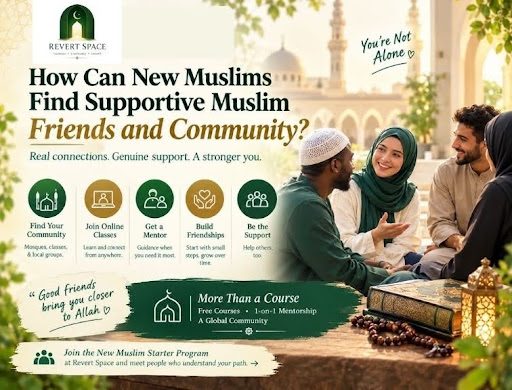
Becoming Muslim often changes who you spend your time with.
Old routines shift, family may not understand, and new friendships rarely appear overnight.
Joining live online Islamic classes for reverts is one of the quickest ways to meet people who share your questions and your pace.
At Revert Space, we have supported more than 500 new Muslims, and the most common request we hear is simple: “I want someone who gets it.” This guide explains where to find that person, how to recognise a healthy community, and what to do when it feels hard.
Why Community Matters After Shahada
Connection is a health issue as much as a spiritual one. The World Health Organization’s Commission on Social Connection reports that about 1 in 6 people worldwide experience loneliness, and it links loneliness to an estimated 871,000 deaths each year. Strong relationships protect both mental and physical health.
New Muslims face an extra layer. Pew Research Center found that the global Muslim population has grown mainly through age structure and birth rates, with conversion playing a small role. In practice, that means many reverts have no Muslim relatives and may be the only Muslim in their workplace or friend group.
Islam places great weight on belonging. The Prophet (PBUH) compared believers to a building whose parts hold each other up. You were never meant to practise alone.
What Supportive Muslim Friends Look Like
Not every friendly person is a good fit, so know what to look for:
- They answer questions patiently and never mock what you do not yet know
- They respect your pace instead of pushing you to change everything at once
- They encourage you to learn from reliable teachers and sources
- They respect your family ties and your background
- They are honest with you in a kind way when you make mistakes
- They make time for you outside of events, such as a call, a walk, or tea
Where to Meet Muslim Friends and Community
Different spaces suit different personalities. Try two or three at once:
- Your local mosque: Attend Jumuah, arrive a little early, and stay for tea or a community meal. Many mosques run gatherings for newcomers.
- Online classes and study circles: A small class gives you a shared topic and a regular meeting time. Read how online learning helps new Muslims learn from home at your own pace.
- Revert-focused organisations: People who have been through the same transition understand things lifelong Muslims may overlook. See how to build community through Revert Space.
- Student and professional groups: If you study or work in a large institution, check for a Muslim students’ association or a faith network.
- Volunteering and charity events: Serving food, packing donations, or helping at a mosque event lets friendships form while you are busy doing something useful.
- Mentorship programs: A mentor can introduce you to others and answer private questions you may feel shy to ask in a group.
If you are nervous about showing up, this guide on what to expect in your first Islamic class can ease the pressure.
Online or In Person: Which Works Better?
Both help, and most people need a mix.
- In person gives you hugs, shared meals, and someone who can sit beside you in prayer. It builds trust quickly but depends on what is near you.
- Online gives you access to people at any hour and to teachers you might never meet locally. It suits busy schedules, shy beginners, and people in areas with few Muslims.
A practical approach is to use online classes for learning and routine, then add one in-person space for prayer and friendship. Choose moderated groups with clear rules and known teachers, because open forums can attract arguments and misinformation.
How to Start Conversations and Keep Them Going
Meeting people is only the first step. These habits turn greetings into friendships:
- Say salam, introduce yourself, and mention that you are new. Most people respond warmly.
- Ask one simple question, such as how long someone has attended or what helped them learn to pray.
- Accept invitations, even small ones.
- Follow up within a few days with a message or a dua. Consistency matters more than a long chat.
- Offer help. Carrying chairs or sharing a recipe builds trust quickly.
- Be patient. Most solid friendships take a few months of regular contact.
Common Challenges and How to Handle Them
Almost every new Muslim runs into at least one of these:
- Feeling like an outsider: Cultural customs, languages, and in-jokes can make a room feel closed. Look for communities with a mix of backgrounds. Revert Space celebrates diversity and inclusivity for exactly this reason.
- Cliques: Some groups are tight. If one does not open up after a few visits, try another instead of taking it personally.
- Fear of judgment: Mistakes in prayer or etiquette are normal. Learning basic manners from a course such as the Adab and Etiquettes in Islam course helps you feel more at ease in social settings.
- Loneliness at home: Friends and family may not understand your new life. Read about coping with loneliness after converting to Islam and reach out early instead of waiting until it feels heavy.
- Emotional ups and downs: Big life changes bring big feelings. Our post on mental health and spiritual wellness offers gentle ways to look after yourself, and a doctor or counsellor is always a good option.
Keep the Relationships You Already Have
Joining a new community does not mean leaving your old one. The Quran tells believers to keep treating their parents with kindness even when they differ in belief. Stay in touch with family, explain your choices calmly, and invite old friends to activities that fit your values, such as a walk, a meal, or a coffee. Some friendships will change. Many will deepen once the people around you see that you are still you.
Red Flags to Watch For
Most Muslim communities are welcoming, but protect yourself as you would in any group. Step back if someone:
- Pressures you for money or personal details
- Tells you to cut off your family or friends
- Claims that only their group follows the real Islam
- Pushes extreme views or insults other Muslims
- Moves too fast towards romance or marriage without involving trusted people
Take your time, ask questions, and check a teacher’s background before relying on their advice.
Become the Friend You Looked For
Community grows when people contribute. After a few months, consider hosting a small tea evening, starting a study group, or welcoming the next newcomer at your class. You do not need advanced knowledge to do this. Remembering how it felt to walk in as a stranger is often enough to make someone else feel at home.
An Expert Insight on Building Friendships
In our experience supporting new Muslims at Revert Space, depth matters more than numbers. Two or three consistent friends who check on you each week are worth more than a long list of casual contacts. Many reverts find that one steady friendship, often from a class or mentor, opens the door to the wider community.
Frequently Asked Questions (FAQs)
1. How can new Muslims find supportive Muslim friends?
Start by showing up regularly in one or two places: your local mosque, a beginner class, or a revert-focused community. Say salam, mention that you are new, and accept small invitations. Friendships usually form after a few months of steady contact, not after one meeting.
2. Where can a new Muslim meet other Muslims?
Good options include Friday prayer at a local mosque, community iftars, online study circles, student or professional Muslim groups, volunteering events, and mentorship programs. Many new Muslims use online classes for learning and one in-person space for prayer and friendship.
3. Are online Islamic classes a good way to make Muslim friends?
Yes. Live online Islamic classes for reverts give you a shared topic, a regular schedule, and people at a similar stage. They suit busy schedules and people in areas with few Muslims. Choose moderated classes with known teachers.
4. What should I do if I feel lonely or like an outsider after converting?
Feeling this way is common. Look for communities with mixed backgrounds, try more than one group if the first feels closed, and reach out to a mentor or fellow new Muslim early. If the feeling is heavy or lasts a long time, talk to a doctor or counsellor as well.
5. How do I make friends in a mosque as a new Muslim?
Arrive a little early for Jumuah, greet people with salam, and tell them you are new. Ask a simple question, such as what helped them learn to pray, and stay for tea or a community meal. Many mosques also run newcomer gatherings, so ask a volunteer or imam.
6. Should I stay in touch with my non-Muslim family and friends after converting?
Yes. Islam encourages kindness to parents and family, even when they differ in belief. Explain your choices calmly, keep your relationships warm, and invite old friends to activities that fit your values. Some friendships may change, and many deepen over time.
7. What are the warning signs of an unhealthy Muslim community or group?
Be cautious if someone pressures you for money or personal details, tells you to cut off family, claims only their group follows the real Islam, pushes extreme views, or rushes you toward romance or marriage. A healthy community is patient and respects your pace.
8. Does Revert Space offer a community for new Muslims?
Yes. Revert Space offers free structured courses, 1-on-1 mentorship, and a judgment-free community built for new Muslims, so you can learn and connect with people who understand your path.
Start Small and Stay Consistent
Finding supportive Muslim friends takes patience, but the first step is simple: show up somewhere regularly. Choose one mosque, one class, and one online space, and give each a few weeks. Say salam, ask a question, and say yes to the next invitation.
Revert Space offers free structured courses, 1-on-1 mentorship, and a judgment-free community for new Muslims. Join the New Muslim Starter Program and meet people who understand your path.