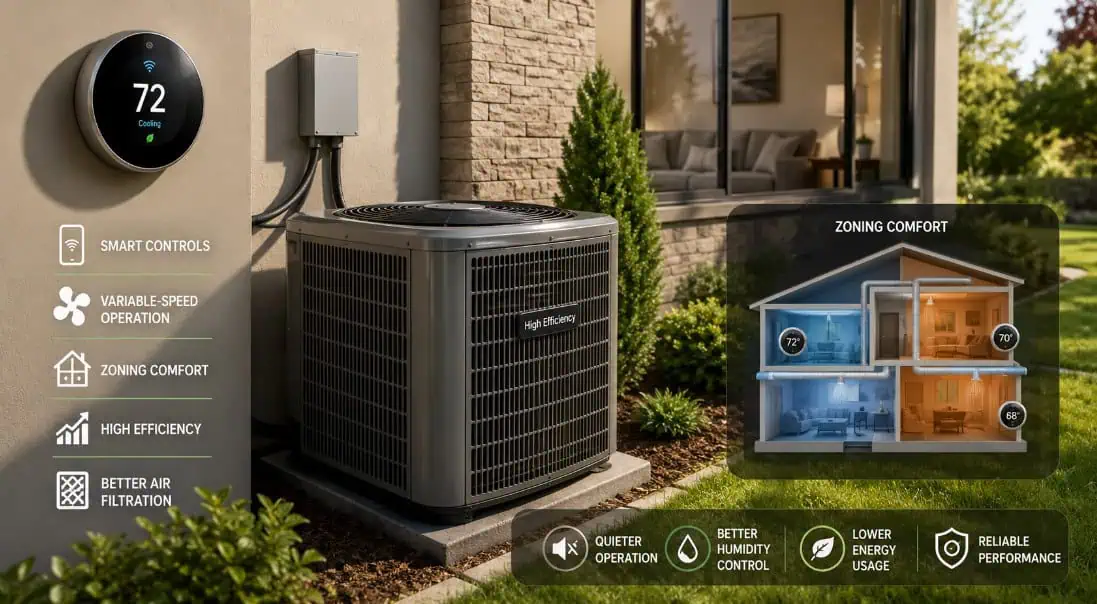
Modern homeowners are increasingly focused on creating comfortable living environments while reducing energy consumption and improving indoor air quality. Smart HVAC systems have become an important part of contemporary residential design by combining intelligent technology with heating, ventilation, and air conditioning solutions.
Unlike traditional HVAC systems that operate through basic controls, smart HVAC systems use advanced sensors, automation, connectivity, and data analysis to manage indoor temperatures more efficiently. These systems help maintain ideal comfort levels while optimizing energy usage and reducing unnecessary operating costs.
Understanding Smart HVAC Systems
A smart HVAC system is an advanced heating, ventilation, and air conditioning solution that uses connected technology to automatically manage indoor climate conditions. These systems can monitor temperature, humidity, air quality, and occupancy levels to provide a more personalized environment.
Smart HVAC technology allows homeowners to control their heating and cooling systems through mobile applications, voice assistants, and centralized home automation platforms.
The main goal of smart HVAC systems is to provide efficient temperature management while creating healthier and more comfortable indoor spaces.
How Smart HVAC Systems Improve Indoor Comfort
Indoor comfort depends on maintaining balanced temperature, humidity, and air circulation. Traditional HVAC systems often require manual adjustments, which can lead to inconsistent comfort levels throughout the home.
Smart HVAC systems automatically adjust heating and cooling settings based on real-time conditions. Sensors detect changes in temperature and occupancy, allowing the system to respond quickly and maintain a stable indoor environment.
This intelligent approach ensures that different areas of the home receive appropriate climate control according to usage patterns and personal preferences.
Energy Efficiency Benefits of Smart HVAC Technology
Energy efficiency is one of the biggest advantages of smart HVAC systems. Heating and cooling systems consume a significant amount of residential energy, and inefficient operation can increase electricity costs.
Smart HVAC solutions improve efficiency by:
- Adjusting operation according to occupancy
- Creating automated temperature schedules
- Reducing unnecessary heating and cooling
- Monitoring energy usage patterns
- Optimizing system performance
By operating only when needed, smart HVAC systems help homeowners reduce energy waste while maintaining comfortable indoor conditions.
Smart Temperature Control and Automated Climate Management
Smart HVAC systems provide advanced temperature control by automatically adjusting heating and cooling based on user preferences and environmental conditions.
Homeowners can create customized schedules for different times of the day. For example, the system can maintain lower energy usage when the house is empty and restore comfortable temperatures before residents return.
Automated climate management eliminates the need for constant manual adjustments and creates a more convenient living experience.
Smart Sensors for Accurate Environmental Monitoring
Advanced sensors are a key component of modern HVAC automation. These sensors collect information about indoor conditions and help the system make intelligent decisions.
Smart HVAC sensors can monitor:
- Room temperature
- Humidity levels
- Occupancy patterns
- Air quality conditions
- Energy consumption
This real-time information allows HVAC systems to deliver precise climate control and improve overall efficiency.
Smart Zoning Systems for Personalized Comfort
Smart HVAC zoning allows homeowners to control temperatures in different areas of a property independently. Instead of heating or cooling the entire house equally, zoning systems provide customized climate settings for specific rooms.
For example, bedrooms can maintain cooler temperatures at night while unused areas receive reduced heating or cooling.
Smart zoning improves comfort while reducing energy consumption by directing resources only where they are needed.
Improving Indoor Air Quality with Smart Ventilation
Indoor air quality plays an important role in creating a healthy home environment. Smart HVAC systems improve ventilation by monitoring air conditions and controlling airflow automatically.
Advanced systems can work with air purification technologies, humidity controls, and ventilation solutions to reduce indoor pollutants and maintain fresh air circulation.
Better air management creates healthier living spaces while improving overall comfort.
Remote HVAC Control Through Smart Devices
One of the most convenient features of smart HVAC systems is remote access. Homeowners can control their heating and cooling systems from anywhere using smartphones or tablets.
Remote HVAC control allows users to:
- Adjust temperature settings while away
- Monitor system performance
- Change operating modes
- Receive maintenance alerts
This flexibility provides greater control and helps prevent unnecessary energy usage.
Integration with Smart Home Automation Systems
Smart HVAC systems can be integrated with complete home automation networks. They can communicate with smart lighting, security systems, sensors, and other connected devices.
For example, an automated home system can reduce HVAC operation when security sensors detect that no one is present. Smart lighting and HVAC systems can also work together to create energy-efficient daily routines.
This integration creates a more intelligent and connected residential environment.
Smart HVAC Maintenance and Performance Monitoring
Regular maintenance is essential for efficient HVAC operation. Smart HVAC systems simplify maintenance by monitoring equipment performance and identifying potential problems.
Many systems provide alerts when filters need replacement, when energy usage increases unexpectedly, or when performance issues occur.
Early detection helps prevent costly repairs and extends the lifespan of HVAC equipment.
Smart HVAC Systems and Sustainable Home Design
Sustainability has become a major priority in modern residential architecture. Smart HVAC systems support environmentally responsible living by improving energy efficiency and reducing unnecessary resource consumption.
When combined with energy-efficient windows, proper insulation, solar energy solutions, and smart thermostats, HVAC automation contributes to creating sustainable and high-performance homes.
These systems help homeowners achieve comfort while reducing their environmental impact.
Smart HVAC Solutions for Different Residential Properties
Smart HVAC technology can be adapted for various residential environments, including apartments, family homes, and larger properties.
In smaller homes, smart HVAC systems provide efficient temperature control and easy automation. In larger properties, advanced zoning and multiple sensor systems allow precise climate management across different areas.
The flexibility of smart HVAC solutions makes them suitable for different architectural styles and lifestyle requirements.
Installation Considerations for Smart HVAC Systems
Proper planning is important when installing a smart HVAC system. Homeowners should evaluate their existing heating and cooling infrastructure, energy goals, and automation requirements.
Important factors include:
- HVAC system compatibility
- Sensor placement
- Network reliability
- Professional installation requirements
- Future upgrade possibilities
A well-planned installation ensures reliable performance and maximum energy efficiency.
Future Trends in Smart HVAC Technology
The future of HVAC technology will focus on greater intelligence, automation, and sustainability. Artificial intelligence and advanced analytics will allow systems to predict user preferences and optimize performance automatically.
Future smart HVAC systems may include improved air quality monitoring, advanced energy management, renewable energy integration, and more personalized climate control.
As smart homes continue to evolve, HVAC automation will become a central part of efficient residential living.
Conclusion
Smart HVAC systems provide a modern solution for energy-efficient heating, cooling, and indoor comfort management. By combining intelligent sensors, automation, remote control, and advanced monitoring, these systems help homeowners create comfortable and efficient living environments.
From reducing energy waste to improving air quality and maintaining personalized temperatures, smart HVAC technology offers significant benefits for modern properties. As residential automation continues to grow, smart HVAC systems will play an essential role in creating sustainable, comfortable, and connected homes.
FAQs
What is a smart HVAC system?
A smart HVAC system is an automated heating, ventilation, and air conditioning solution that uses sensors and connected technology to manage indoor climate conditions efficiently.
How do smart HVAC systems save energy?
Smart HVAC systems save energy by adjusting heating and cooling based on occupancy, schedules, temperature conditions, and actual usage requirements.
Can smart HVAC systems improve indoor air quality?
Yes, smart HVAC systems can improve air quality by managing ventilation, humidity, airflow, and integration with air purification technologies.
Are smart HVAC systems suitable for existing homes?
Many smart HVAC solutions can be installed in existing homes, depending on the current heating and cooling system compatibility.
What is HVAC zoning?
HVAC zoning allows different areas of a home to have separate temperature controls, improving comfort and reducing unnecessary energy use.
Can smart HVAC systems be controlled remotely?
Yes, most smart HVAC systems allow remote control through mobile applications, smart devices, and connected home platforms.